



 Post RFQ
Complete Guide to Purchasing cement electric pole making machine in 2025
Against the backdrop of the continuous expansion and upgrading of global power,communication,and lighting networks,cement electric poles,as essential infrastructure,are experiencing stable growth in market demand.Whether it's power grid construction in emerging markets or the renovation of aging lines in developed countries,efficient and reliable cement electric pole production equipment is indispensable.Facing the numerous models and suppliers of cement electric pole making machines on the market,how can one make an informed choice?This article provides a comprehensive analysis of the equipment's principles,types,and selection guidelines.
1.How Does a cement electric pole making machine Work?
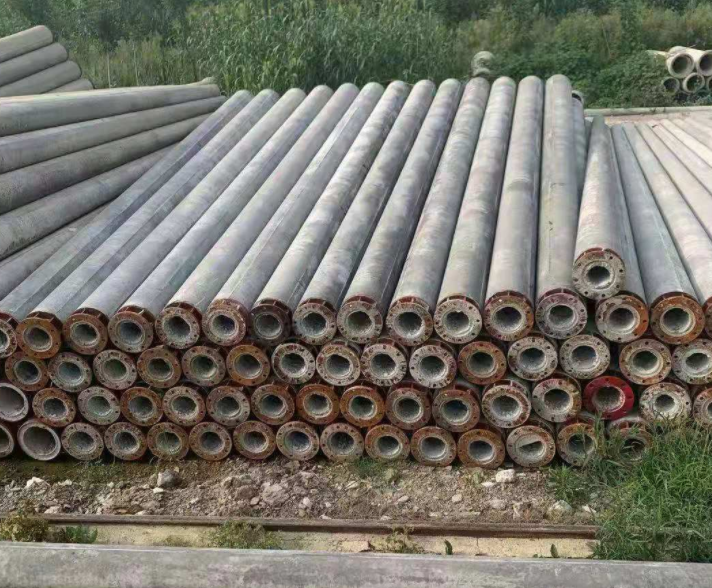
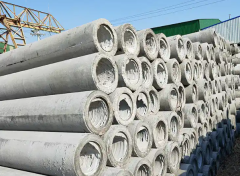
The production of cement electric poles(also known as reinforced concrete electric poles)is primarily based on the centrifugal principle.By rotating the steel mold at high speeds,centrifugal force expels excess water from the concrete,making it highly compact and forming a hollow internal structure.This process ultimately results in cement poles with high strength and durability.
A complete cement electric pole production line mainly includes the following core components:
Steel Mold(Mold):The key mold that determines the pole’s shape,size,and taper,usually made of high-quality steel.
Centrifuge(Centrifuge):The equipment that drives the steel mold to rotate at high speeds;it is the core of the production process.
Concrete Mixer(Concrete Mixer):Used to uniformly mix cement,aggregates(sand and gravel),water,and additives.
Steel Cage Making Machine(Steel Cage Making Machine):Used to weld main ribs and spiral ribs into a sturdy skeleton.
Tension Machine(Tension Machine):(For pre-stressed poles)Used to pre-tension the steel bars,enhancing the pole’s bending resistance.
Curing Pool/Steam Curing Room(Curing Pool/Steam Curing Room):Accelerates the cement hydration reaction through steam,shortening demolding time and improving early strength.
2.Main Types of Cement Electric Pole Making Machines
2.1 Manual/Semi-Automatic Production Lines
Features:Each piece of equipment operates independently.Processes such as feeding,mold closing,tensioning,centrifuging,and curing require manual assistance or single-machine operation.
Advantages:Low initial investment cost,simple equipment structure,and easy maintenance.
Disadvantages:Relatively low production efficiency,product quality highly dependent on workers’operational skills,and requires a larger workforce.
Applicable Scenarios:Ideal for small factories with an annual output of less than 10,000 poles,startups,or investors with limited budgets.
2.2 Fully Automatic Production Lines
Features:Integrated using PLC(Programmable Logic Controller)systems,achieving automated流水线operations from mixing,feeding,and mold closing to centrifuging and curing.Workers are only responsible for monitoring and debugging.
Advantages:Extremely high production efficiency,stable output,uniform and standardized product quality,and minimal labor requirements.
Disadvantages:High initial investment,demanding requirements for factory foundation and power supply,and maintenance requires more specialized technicians.
Applicable Scenarios:Suitable for large-scale producers with an annual output exceeding 30,000 poles,and enterprises pursuing scale,industrialization,and ultimate efficiency.
3.Guidelines for Selecting a Cement Electric Pole Making Machine
3.1 Define Needs and Plan(The Most Important First Step)
Target Output:How many poles do you plan to produce daily/monthly?This directly determines whether you need a semi-automatic or fully automatic machine.
Product Specifications:What specifications of poles will you mainly produce?(e.g.,length 6-12 meters,tip diameter 150mm-190mm,load-bearing capacity,etc.).Different specifications require different steel molds and equipment configurations.
Budget Range:What is your budget for equipment procurement?Be sure to reserve 15%-20%of the equipment cost for transportation,installation,debugging,and initial working capital.
3.2 Evaluate Key Equipment Parameters
Production Efficiency:How long is the complete cycle from feeding to centrifuging for one pole?
Power Consumption:The total power consumption of the entire equipment at full load,which affects your long-term operating costs.
Material and Workmanship:The thickness and material of the steel mold(e.g.,Q235 or 45#steel)directly affect its service life.Check the welding quality and structural stability of the main frame.
3.3 Assess the Supplier’s After-Sales Service Capability
Installation and Training:Does the supplier provide on-site installation,debugging,and operator training?This is crucial for ensuring smooth production commencement.
Technical Guidance:Is complete production process guidance provided(e.g.,concrete mix ratio,centrifuge speed and time settings)?
Parts Supply:Are wear-prone parts(e.g.,rubber wheels,bearings)in stock,and can they be supplied quickly?
Warranty Policy:What is the warranty period for the whole machine and core components?
The above is an introduction to cement electric pole making machines.Hope it helps you!


 ALL CATEGORIES
